.svg)


TL;DR
- Sales Pipeline Management Software is essential because 86% of deals stall, often without CRMs detecting the risk.
- Top tools reviewed include HubSpot (ecosystem/cost complaint), Salesforce (enterprise fit/admin load complaint), Pipedrive (lightweight/simplistic), and Chief (behavioral pipeline management).
- Minimizing cost, prioritizing adoption, and choosing between all-in-one or best-of-breed solutions were the key buying drivers.
- The most-mentioned features of pipeline management software are integrations with other tools, automations and workflows, and outreach capabilities.
The Problems Sales Pipeline Software Solves
At the Friday review, your pipeline looked clean. Every deal had a stage, a close date this quarter, and a recent activity logged. Three weeks later, a $90K opportunity that had sat in "verbal commit" went quiet, then disappeared.
This outcome is the rule, not the exception. Forrester's 2024 State of Business Buying reports that 86 percent of purchases stall somewhere in the process. A deal that stalls quietly still looks healthy in the CRM…right up until it dies at the end of the quarter.
This guide breaks down what the different tools actually do, and what practitioners say about living with them. After using the guide, you can decide which type fits your situation—before you sit through five demos.
"When I look at a rep's pipeline in Salesforce, I can see what they logged. What I can't see is whether the deal is actually moving. A deal can have a clean stage, a recent activity date, and a close date this quarter and still be dead. The questions that predict a miss are behavioral: who is engaged, how fast the deal is moving against your own norm, whether anyone besides the champion has shown up. Most tools weren't built to answer those questions." -Bret Larsen, Founder & CEO, Chief
The Top Pipeline Management Tools
Out of the many pipeline management tools on the market, there were 7 that stood out in our research. Compare each one on the dimensions that matter: who it fits, what practitioners praise, where they push back, and whether it carries a behavioral signal layer or only records what reps enter.
1. HubSpot Sales Hub
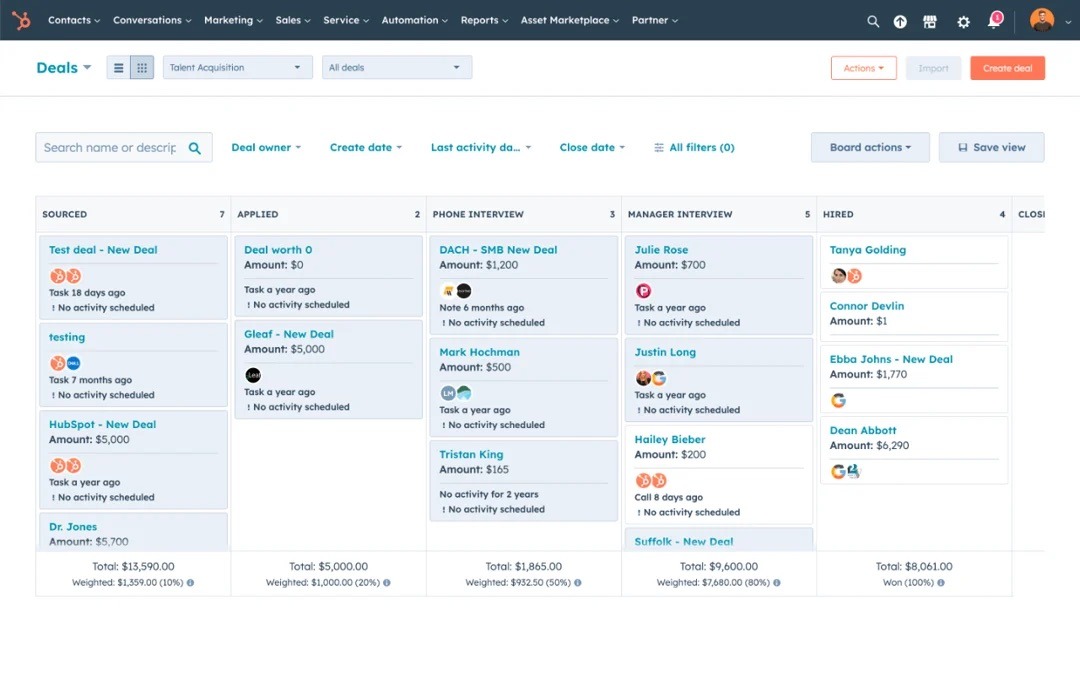
Best for: Growth-stage teams consolidating sales and marketing on one platform.
What users praise: Users love the all-in-one ecosystem, integrations with Google and Outlook, responsive support, and a genuine free tier. Hubspot was the only tool in the dataset that users singled out for these factors.
Where users push back: Cost is the single loudest complaint in the data. The jump from cheap starter tiers to Pro and Enterprise reads as overkill for teams not using the full marketing stack. Email and reporting draw repeated gripes; one r/CRM user said the email experience alone made HubSpot a non-starter. Early hands-on reports on its Breeze AI are mixed.
Pipeline signal layer: Field-based. Forecasting reflects what reps enter, not how deals are behaving.
“There is a point where a system like HubSpot unlocks enough productivity of your humans that it effectively covers the cost of a full-time employee.” - r/CRM commenter
2. Pipedrive
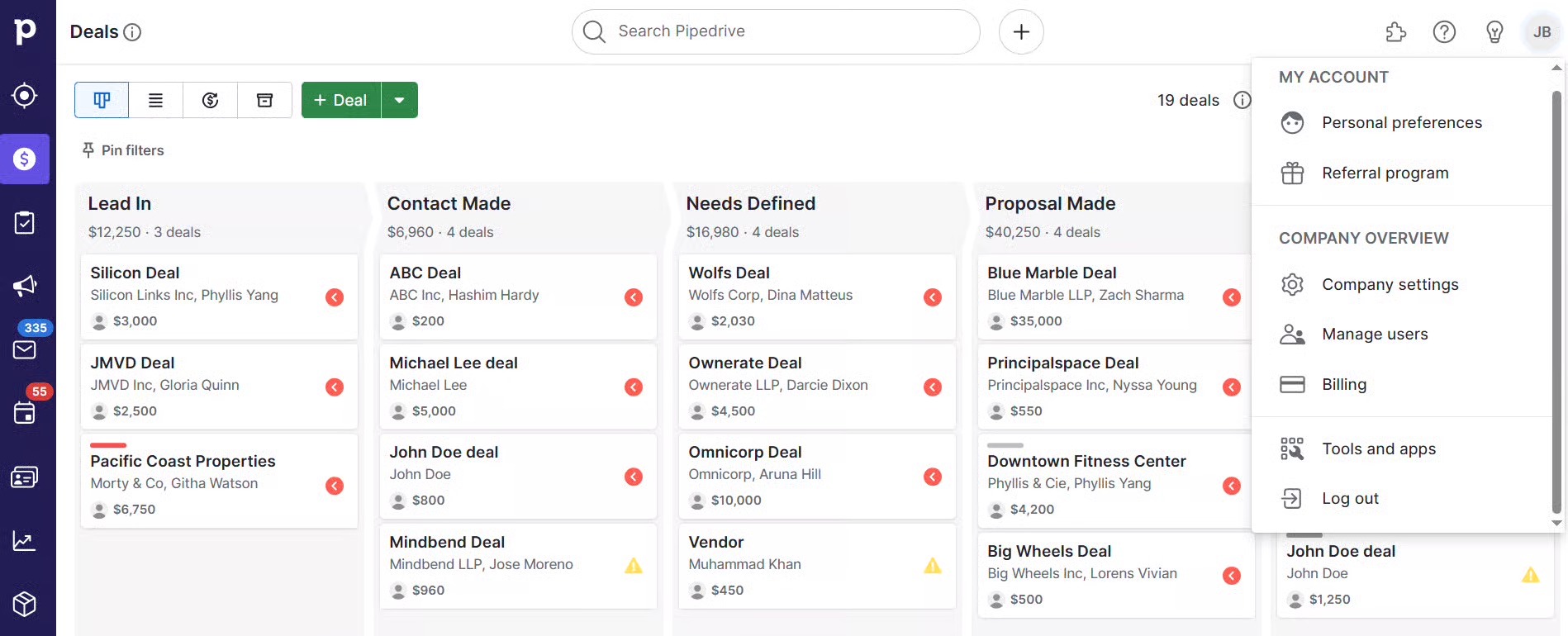
Best for: Small teams (roughly 3 to 15 reps) that want clean, visual pipeline management without CRM bloat.
What users praise: Lightweight, clean, and visual; marketers like the forward read it gives on the funnel.
Where users push back: Thin feature depth and a recurring "too simplistic" verdict (one veteran said it was likely written by a programmer with no real-world selling experience). Cancellation signals show up across the threads, alongside weak support.
Pipeline signal layer: None. Tracks what you log, not what is happening in the deal.
“I've been implementing CRMs since 2013. I've chosen Pipedrive almost every time for small- to medium-sized businesses with an annual turnover of $500,000+. It's not perfect, but no system is.” - r/CRM commenter
3. Salesforce Sales Cloud
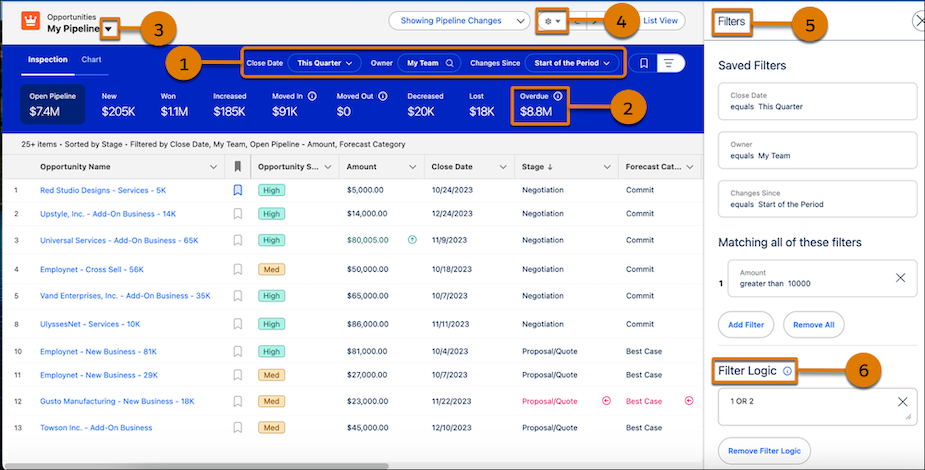
Best for: Larger organizations with complex, multi-stage processes and dedicated RevOps or admin resources.
What users praise: Reliability, ecosystem depth, enterprise fit, and Agentforce, which effectively owns the AI conversation in these threads (15 mentions versus scattered references for everyone else). Lead scoring rides the same story.
Where users push back: The harshest criticism in the entire dataset. Heavy administration, high cost, and steep complexity; one r/sales user called a recent rollout the biggest disaster of their sales career.
Pipeline signal layer: Field-based, with AI add-ons. Powerful, but it rewards ongoing configuration rather than surfacing risk on its own.
“For mid-to-enterprise customers it's still the best system around because it's the most mature. But the price tag of Salesforce is looking increasingly delusional compared to its competitors” - r/salesforce commenter
4. Attio
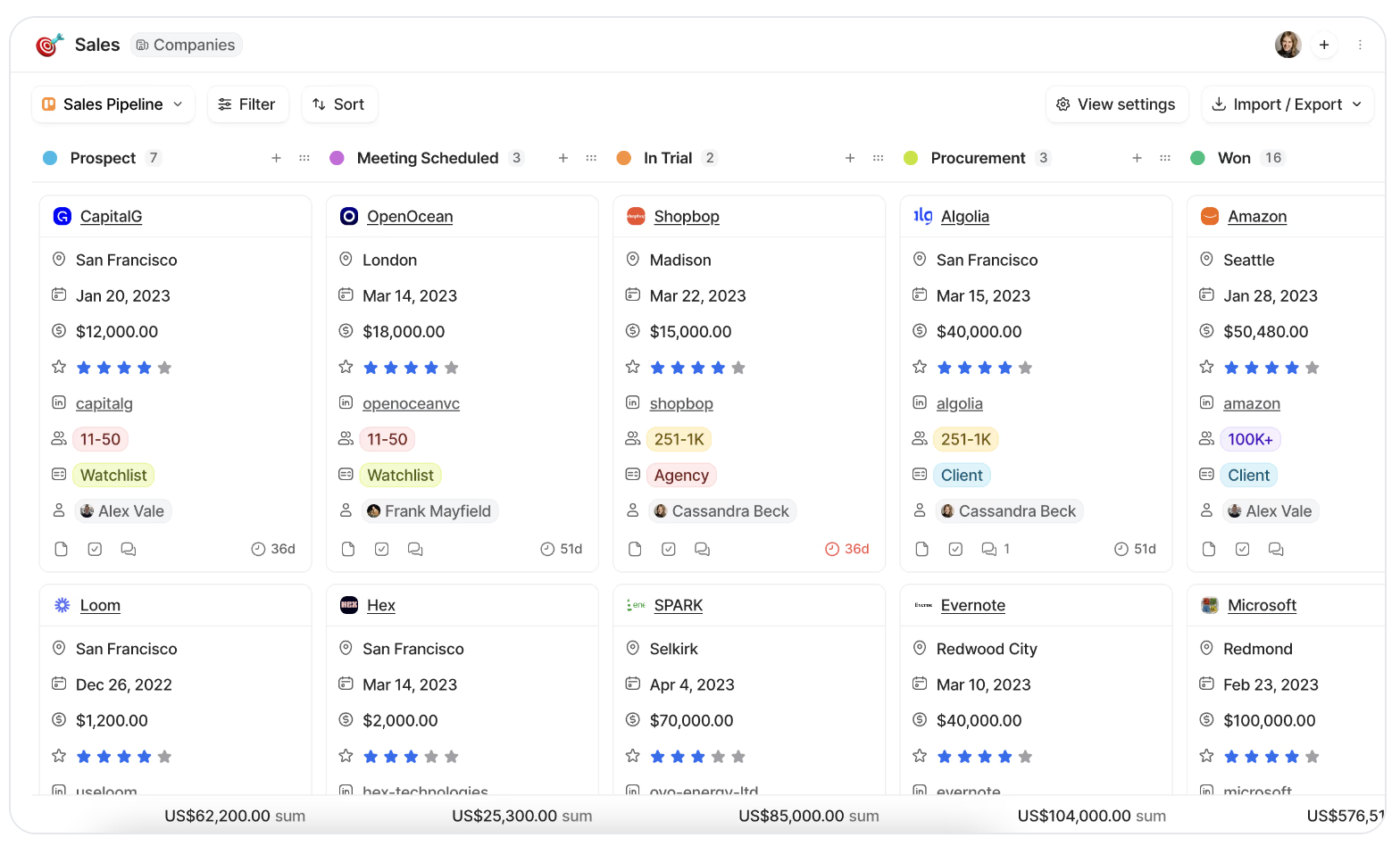
Best for: Modern, data-model-flexible SaaS companies and technical teams under 25 people.
What users praise: Clean design, flexibility, and AI-native workflows.
Where users push back: Fewer integrations than incumbents, missing permissions and team-management features, and a build-your-own overhead; reps often are not trained on it.
Pipeline signal layer: None (CRM-first). A flexible data model, not a behavioral layer.
“Attio is powerful and flexible, but it’s more “build your own system” — great if you want to model everything, but it can feel like more configuration/maintenance for reps.” - r/CRM commenter
5. Close
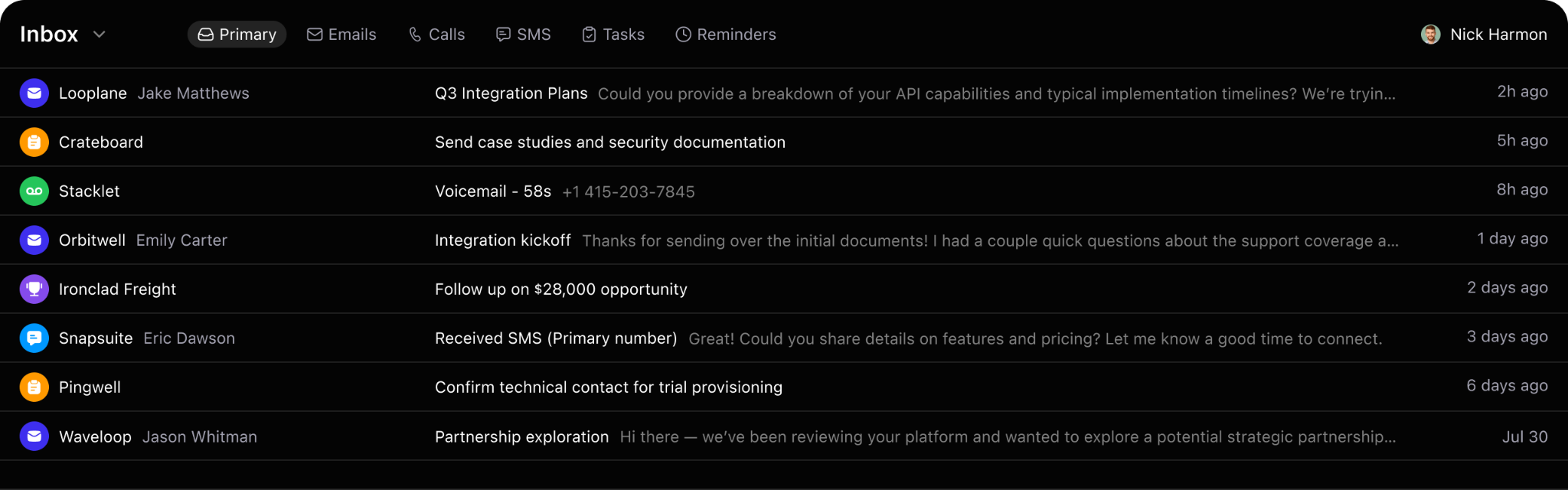
Best for: High-volume outbound teams where calls and sequences drive revenue.
What users praise: Built-in dialer and SMS for velocity-driven motions.
Where they push back: Not built for complex enterprise deal management.
Pipeline signal layer: None.
“Close is awesome, but honestly too expensive IMO; I'd need to pay $250 per month per agent if I get everything I want to have.” - r/CRM poster
6. Zoho CRM
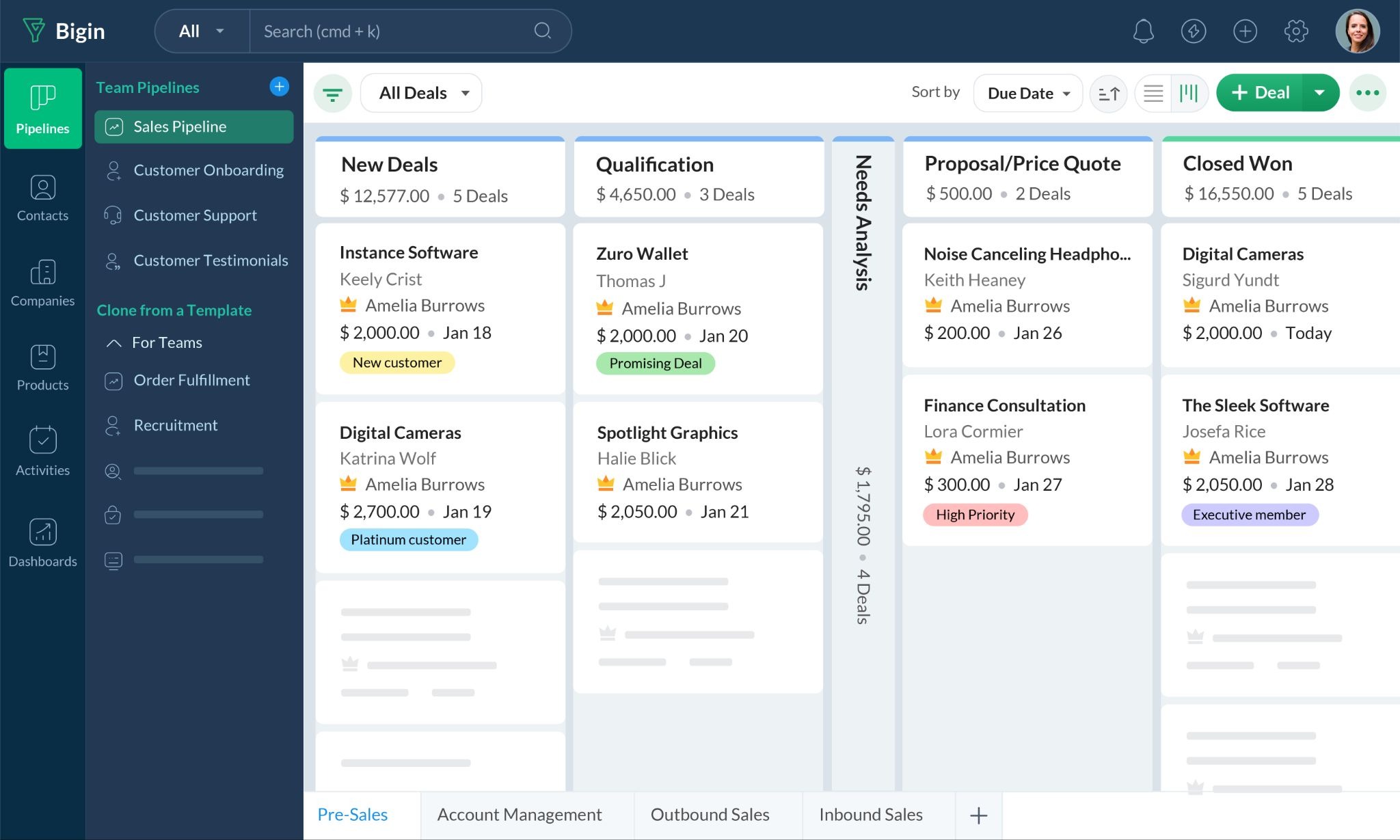
Best for: Teams that want a customizable, marketing-rich platform across multiple functions at a lower price point.
What users praise: Highly customizable; one r/CRM commenter described it as close to an operating system across all functions.
Where they push back: Seen as behind on AI, and it can feel like a set of integrated apps rather than one unified platform.
Pipeline signal layer: Field-based.
“Zoho is flexible with a lot of modules, though sometimes the UI can feel clunky.” - r/CRM commenter
7. Chief
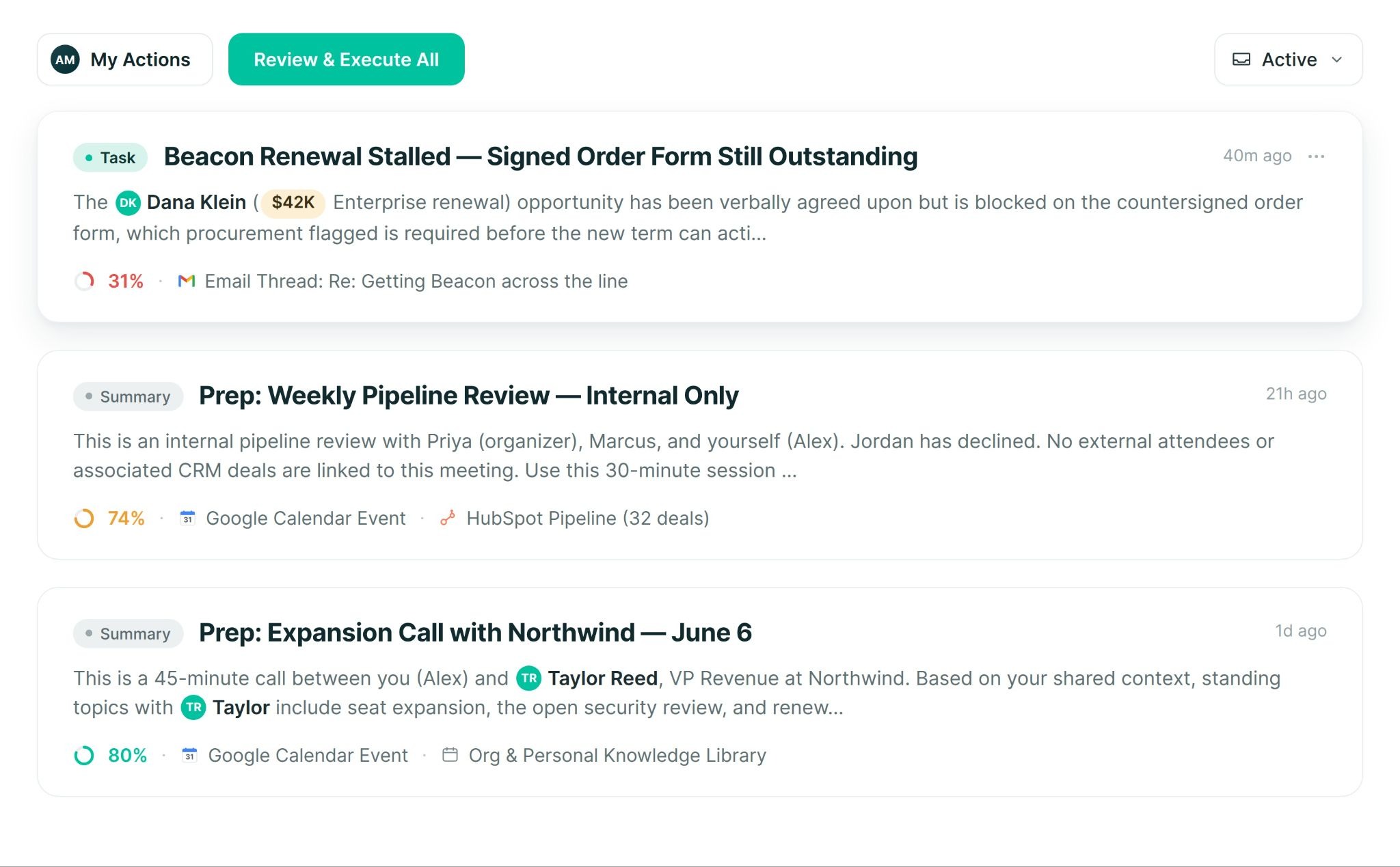
Best for: B2B revenue teams where deals are tracked but still stall inside the CRM without anyone catching it in time.
What it does: Connects to your CRM, email, and calendar, learns what normal deal progression looks like for your team, and flags four risks as they emerge: stale or inactive deals, deals stuck in a stage past your velocity norm, close-date drift, and single-threaded accounts. Chief identifies which risk is driving the deal and recommends the play to run, which is the line that separates it from tools that only report.
Proof: One customer (1,500 employees, $300M ARR) identified $15.2M in at-risk revenue with Chief.
Where it is not a fit: If you run with fewer than five reps, or are not yet dealing with deals that stall unpredictably.
Pipeline signal layer: Behavioral. Reads activity across the stack rather than relying on entered fields.
“It pulled all of the right context from past threads to draft the follow-up. It felt magical.” - Chief user
Author's Note: I have been a HubSpot user for 11+ years, and Hubspot is the CRM we currently use at Chief. I often hear Hubspot touted among my peers as “the marketer’s CRM.” I personally like it for its ecosystem, reporting, and workflow capabilities. The full feature set is more robust than a team our size needs. Most salespeople I have interacted with prefer Salesforce for its pipeline customizations. Take these anecdotal observations for what they’re worth.
What Users Actually Say About Pipeline Management Software
Demos and vendor pages tell you what a tool is supposed to do. To find out what it is like to live with, we read 404 posts and comments from r/CRM, r/sales, r/salesforce, and r/hubspot, then verified the direction of sentiment by reading the strongest positive and negative threads for each tool rather than trusting raw scores. Five patterns emerged in the data:
1. Cost is the crux of the conversation.
Pricing is both the most-discussed and the most-complained-about topic by a wide margin, and HubSpot’s leap from cheap starter tiers to Pro and Enterprise is the single most cited grievance.
2. The tool matters less than adoption.
The most repeated practitioner refrain is that the brand on the CRM is secondary to getting the team to actually use it and letting the process drive behavior. Whatever you buy, plan for adoption.
3. All-in-one versus best-of-breed is an open debate.
Buyers weigh one unified platform (e.g., HubSpot, Zoho) against stitching lighter tools together (e.g., Pipedrive + marketing tool + support tool).
4. AI is table stakes, but uneven in practice.
Salesforce’s Agentforce dominates AI mentions and sets the bar; rivals get judged as “behind.” Early hands-on reports are mixed, with HubSpot’s Breeze drawing reports of mistakes.
5. Clean-and-light versus powerful-and-heavy is the clearest fault line.
Pipedrive and Attio win the clean and light category, and Salesforce and HubSpot win on powerful and heavy.
What Users Want Their Pipeline Management Software to Do
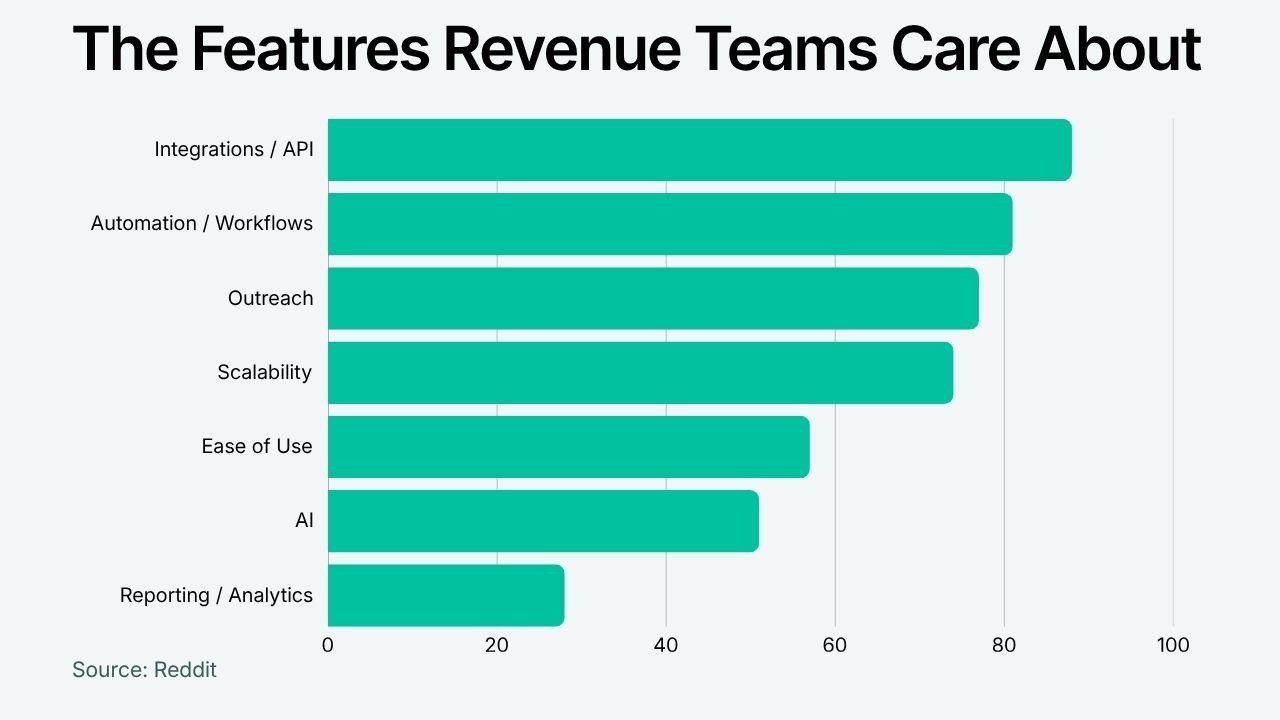
Out of all of the pipeline management features discussed, practitioners mentioned seven more than the rest:
- Integrations / API: Connects the CRM to the rest of the revenue stack so deal data lives in one place instead of being re-keyed across tools, which is what keeps the pipeline trustworthy enough to forecast from.
- Automation / Workflows: Takes manual admin off reps’ plates so more of the week goes to actual selling rather than data entry.
- Outreach: Keeps prospecting and follow-up activity inside the system, where it can be tracked, measured, and coached instead of scattered across inboxes.
- Scalability: Lets the tool keep working as headcount, deal volume, and process complexity grow, so a team isn’t forced into a disruptive re-platform mid-growth.
- Ease of Use: Drives adoption, and adoption is the whole game, because reps only update what’s fast to update and clean pipeline data depends on it.
- AI: Surfaces patterns and next steps across far more deals than a manager could review by hand, so risk and opportunity get caught earlier.
- Reporting / Analytics: Turns raw pipeline activity into accurate forecasts leadership can actually use to make informed decisions.
How Users Feel about the Top Pipeline Management Tools
We analyzed the sentiment of each tool mentioned. Some were more polarizing than others*:
*Note on the data: Hubspot and Salesforce are by far the most widely used pipeline management tools, so they were overrepresented in the sample. Close and Chief did not have sufficient data for a valid sentiment score.
How to Choose the Right Tool
Any major software purchase depends highly on your business's unique context. If your situation matches any of the below circumstances, consider adding the corresponding tool to your shortlist.
Common Questions
What is sales pipeline management software?
Sales pipeline management software tracks deals through each stage of a sales process, from first contact to close, and gives teams visibility into where deals stand, where they are getting stuck, and what revenue is expected to land. The category spans CRM-first tools that organize deal activity (HubSpot, Salesforce, Pipedrive) and behavioral platforms that detect deal risk and surface early signals (Gong, Chief).
What is the difference between a CRM and pipeline management software?
Most CRMs include pipeline management features. But "pipeline management software" can also describe tools that sit on top of a CRM and provide deal intelligence rather than deal tracking. A CRM shows you what reps logged. A behavioral platform shows you what is happening in the deal — activity patterns, stakeholder engagement, velocity drift — regardless of what was entered.
When should a team buy pipeline management software separately from its CRM?
When tracked deals keep stalling or missing forecast without warning. If you run Salesforce or HubSpot and still get pipeline surprises on Friday, the gap is usually deal intelligence rather than deal visibility.
What should I look for in sales pipeline management software?
Start with the type of problem you are solving. For deal organization: ease of adoption, CRM integration, and reporting. For deal risk detection: signal coverage across email, calendar, CRM, and calls, pattern recognition across the full pipeline, and explainability — a reason behind every flag, not just a red dot.
Does Chief replace my CRM?
No. Chief sits on top of your existing CRM, such as Salesforce or HubSpot, and adds a behavioral detection layer that CRMs do not provide. You keep the CRM you have.
Try Chief free to start catching the deals your CRM says are fine and managing your pipeline better.
Methodology & Limitations
Source: 404 unique and recent posts, comments from r/CRM, r/sales, r/salesforce, r/hubspot.
Features and tools detected via keyword/aspect coding; sentiment via lexicon scoring, then verified by reading the strongest positive/negative quotes per tool.
This research is designed to be a reference point, and by its nature will not be comprehensive or a fully representative sample.