.svg)


TL;DR
- Revenue intelligence software analyzes multi-source deal activity to equip sales leaders with actionable insights into pipeline health, deal risk, and forecasting accuracy.
- Revenue intelligence is undergoing a structural shift from passive dashboards toward decisions and execution.
- The top revenue intelligence tools reviewed here (Gong, Salesforce Agentforce, Substrata, Revenue Grid, Clari, and Chief) take different approaches to the industry shift.
- Revenue professionals rank integration quality and price as the two most important decision drivers, ahead of any specific AI feature.
- The platforms that deliver consistent ROI are those that reduce administrative friction and surface decisions, not just data.
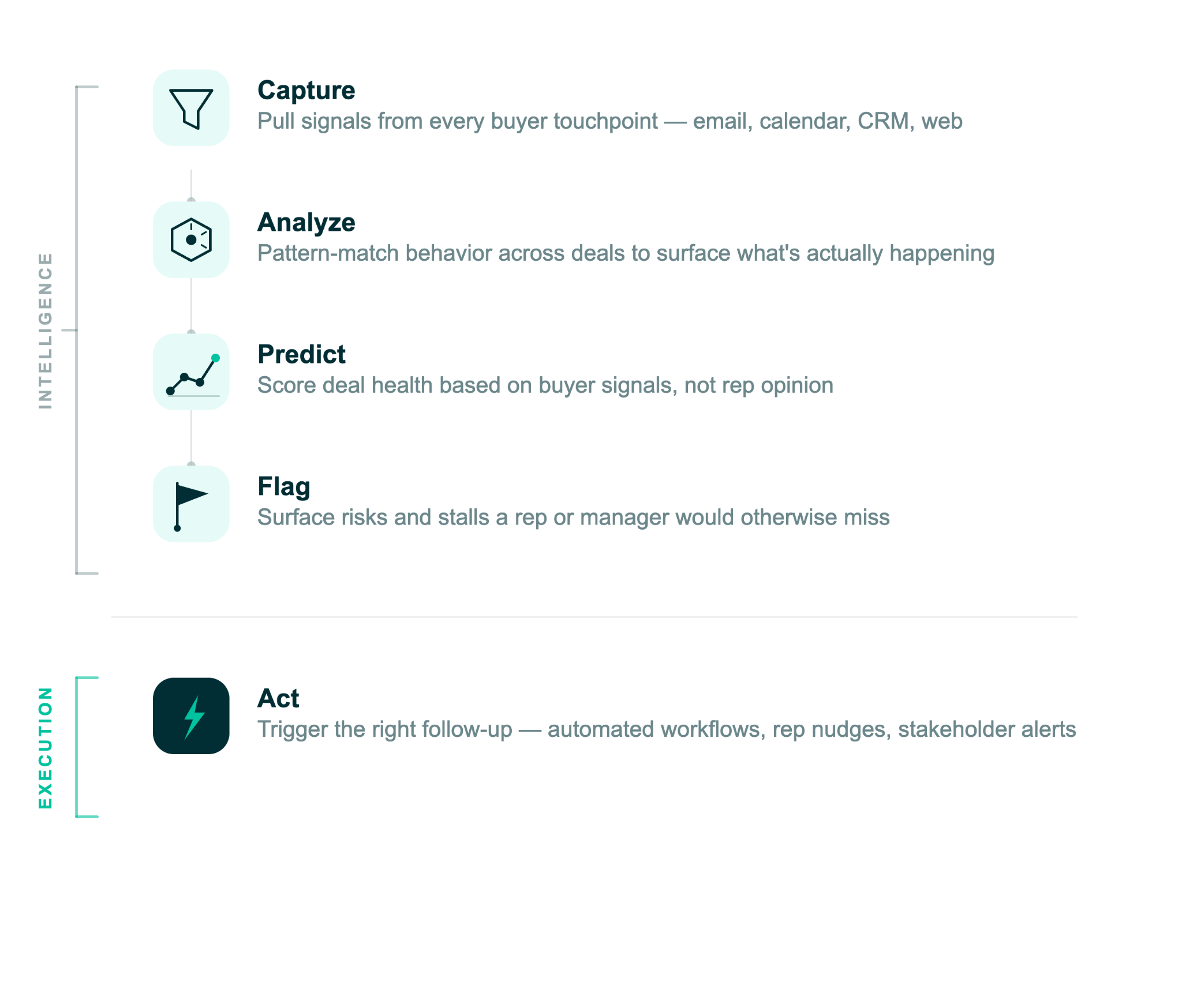
- Chief is a revenue execution platform that sits above the intelligence layer, detecting behavioral deal risk in real time and running the prescribed play.
Why B2B Sales Orgs Need Revenue Intelligence Software
Alex has been VP of Sales at a $40M ARR SaaS company for eight months.
Every Friday forecast call followed the same pattern. The number looks stable until the last week of the quarter. A cluster of deals slip—some to next quarter, some into oblivion. The CRM shows clean stages, recent activity dates, and close dates that matched the quarter. But the buyer behavior wasn’t there.
Alex already has software for this. The team runs Salesforce, uses a forecasting overlay, and records calls. What they don’t have is a system that can tell the difference between a deal that’s moving and one that only looks like it’s moving.
Revenue intelligence platforms emerged to address this gap. CRM-first architectures have a major limitation: CRMs record what reps log, not what is actually happening in a deal. A stage update is an opinion. An activity date reflects the last seller touch, not whether the buyer is engaged. Close dates, as any sales leader knows, migrate to the last day of the quarter with remarkable consistency.
The category has since expanded well beyond deal inspection. According to the Q3 2024 Forrester Wave for Revenue Orchestration Platforms, the revenue teams are consolidating sales engagement, conversation intelligence, and revenue operations analytics. As these functions converge, software is evolving to mirror that shift.
Expert Insights on Revenue Intelligence Software
I asked 3 B2B sales leaders about where revenue intelligence is headed. This is what they told me:
"The minute you see data visualized you think, ‘Okay, what happened? Why did it happen? What's going to happen next? And what would happen if…?’ The problem is that almost all data visualizations answer questions that have already been asked. Revenue leaders need to know cause and effect: if you do x, you will get y. Then you can pulling different levers." -Bret Larsen, Founder & CEO, Chief
"Most companies don't have a revenue intelligence problem. They have a data fragmentation problem…tool sprawl creates hidden operational costs through duplicate data and constant context switching. Revenue intelligence works best when it sits on top of a unified workflow, not a patchwork of apps" -Gregory Shein, CEO, CORCAVA
"Revenue intelligence is great at the autopsy and weak at the intervention. It tells you a deal is slipping. It rarely tells you the one thing that would unstick it, which is usually access. You didn't lose the deal on messaging. You lost it because you never reached the person who could actually say yes, and no dashboard surfaces the warm path to that person." -Shankar Ganapathy, Co-founder, Boomerang AI
The tools reviewed in this guide each take a different approach to the shifts happening in revenue intelligence.
The Top Revenue Intelligence Tools
We reviewed dozens of conversations to identify the top revenue intelligence software tools—and what revenue pros are really saying about them. Across the tools reviewed, five approaches emerged: conversation-first (Gong), forecast governance (Clari), CRM-native AI (Salesforce Agentforce), guided selling (Revenue Grid), and intent signal processing (Substrata). Chief is advancing the category as an execution layer: it detects deal risk in buyer behavior and runs the right play at the right time.
1. Gong
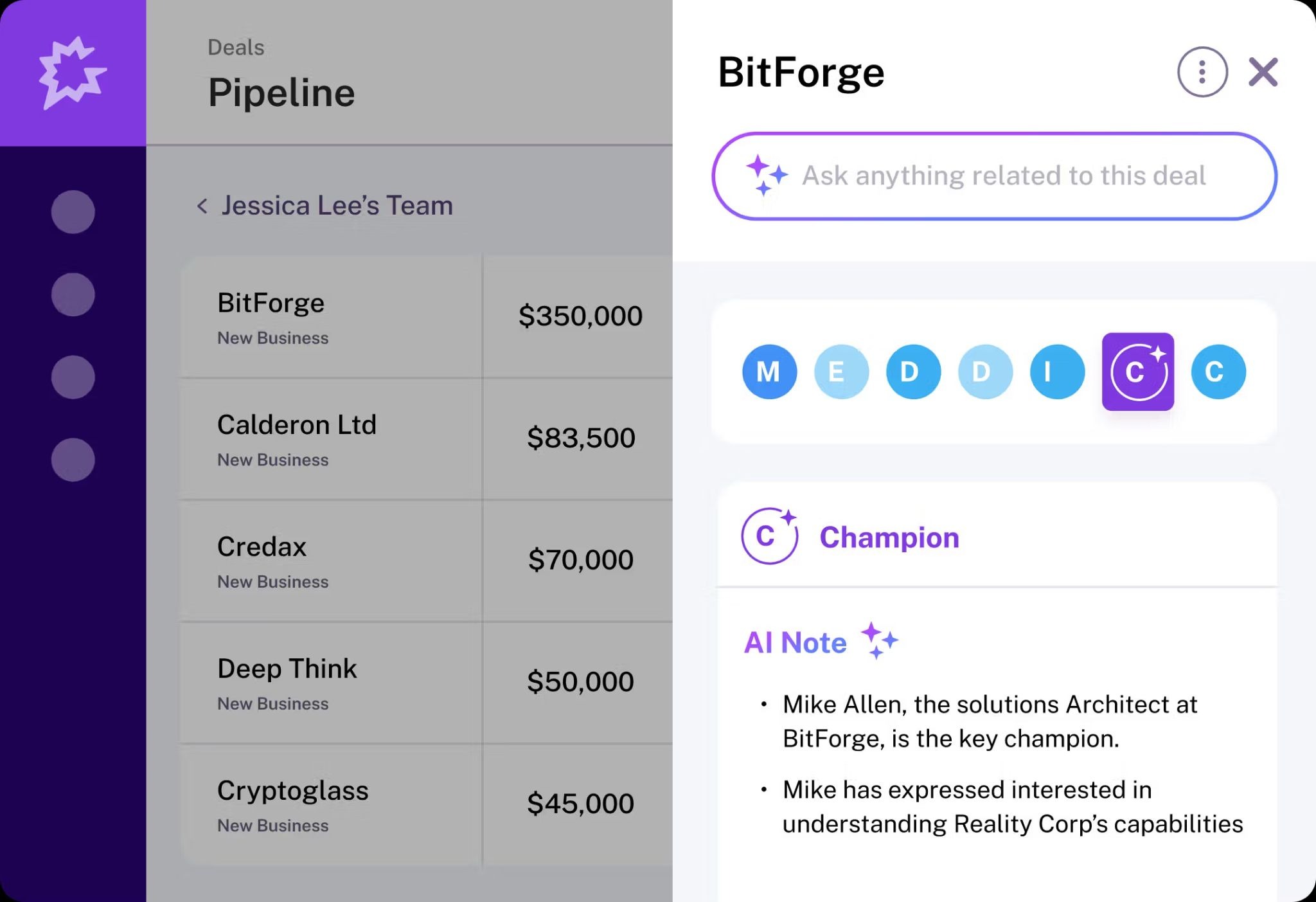
Best for: Revenue teams where understanding the content of buyer conversations is the primary intelligence need.
What Users Praise
Gong holds a 4.7 out of 5.0 G2 rating across more than 6,600 verified reviews as of June 2026. This makes it the highest-volume and highest-rated platform in the Revenue Operations and Intelligence category. The platform's natural language processing automatically identifies objection patterns, competitive mentions, sentiment shifts, and multi-stakeholder signals across calls, emails, and video. Users consistently single out call recording and AI-generated meeting summaries as the most concretely useful features in the category. The "Ask Anything" conversational query layer—cited by Forrester as a foundational AI innovation—lets users surface patterns across thousands of recorded interactions without manual review.
“Gong had the massive lead in CI, won the sales rep and leadership and has built the best brand." -LinkedIn Commenter
Where Users Push Back
The most consistent criticism revenue professionals mention is cost. Gong's pricing combines a platform base fee (historically around $5,000) with per-user licensing approximating $1,600 annually. This structure drives effective costs to $300–$500 per user per month.
The second criticism is operational: without active coaching cadences enforced by management, Gong frequently becomes an expensive call library rather than an active operating system. Several verified reviewers note that Gong's capabilities outside conversation analytics (pipeline management, forecasting, deal execution, etc.) are materially weaker than its core product.
“Gong is great at CI but everything other than conversational analytics is a 10th best option…" -r/sales Commenter
Revenue Intelligence Layer: Conversation-First
Gong derives deal health from what buyers and sellers say, not from CRM field data. This makes it the strongest tool in the category for diagnosing why a deal is stalling, provided the relevant conversations were recorded. It does not, however, natively generate or execute remediation plays.
2. Clari
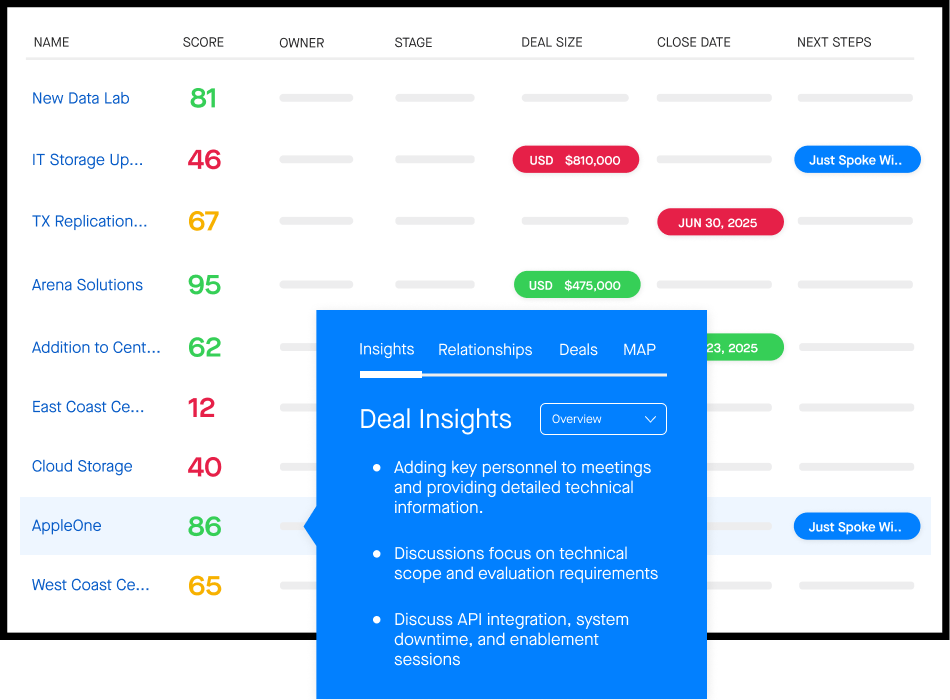
Best for: Enterprise and upper-mid-market revenue teams where forecast governance and pipeline inspection at scale are the primary executive requirements.
What Users Praise
Clari holds a 4.6 out of 5.0 G2 rating and has been consistently named a Leader in Forrester evaluations, receiving the highest possible scores in data architecture, pipeline management, and forecasting insights. Its structural strength is hierarchical forecast roll-ups: the platform establishes a shared, immutable view of the pipeline that enables consistent weekly commit tracking across global organizations. Time-series analysis, customizable forecasting metrics, and a sophisticated data infrastructure capable of supporting multiple simultaneous use cases are the capabilities its users most frequently credit.
Where Users Push Back
Clari is a governance overlay, not a data-quality tool. As multiple users note, if the underlying CRM data is unreliable (the reality for most growth-stage teams) Clari applies sophisticated governance to unreliable inputs. The result is an accurate view of inaccurate data. The December 2025 merger with Salesloft also turned Clari into an entity serving 5,000+ organizations and managing $10 trillion in annual revenue flow. The friction is that the unified product roadmap remains years from completion. Buyers renewing today are committing to an architecture that doesn’t fully exist yet. Pricing is customized for enterprise deployments, with historical estimates exceeding $200 per user per month.
Revenue Intelligence Layer: Forecast Governance
Clari is the strongest tool in the category for top-down pipeline inspection and commit management. Its intelligence layer is executive-facing by design, which makes it less suitable for deal-level behavioral detection at the rep level.
“Clari is a great tool, it's reliable, it's clean, and my reps love using Clari to make updates over SFDC…If your SFDC data is disgusting, don't expect Clari to fix that problem."
-r/salesoperations Commenter
3. Salesforce
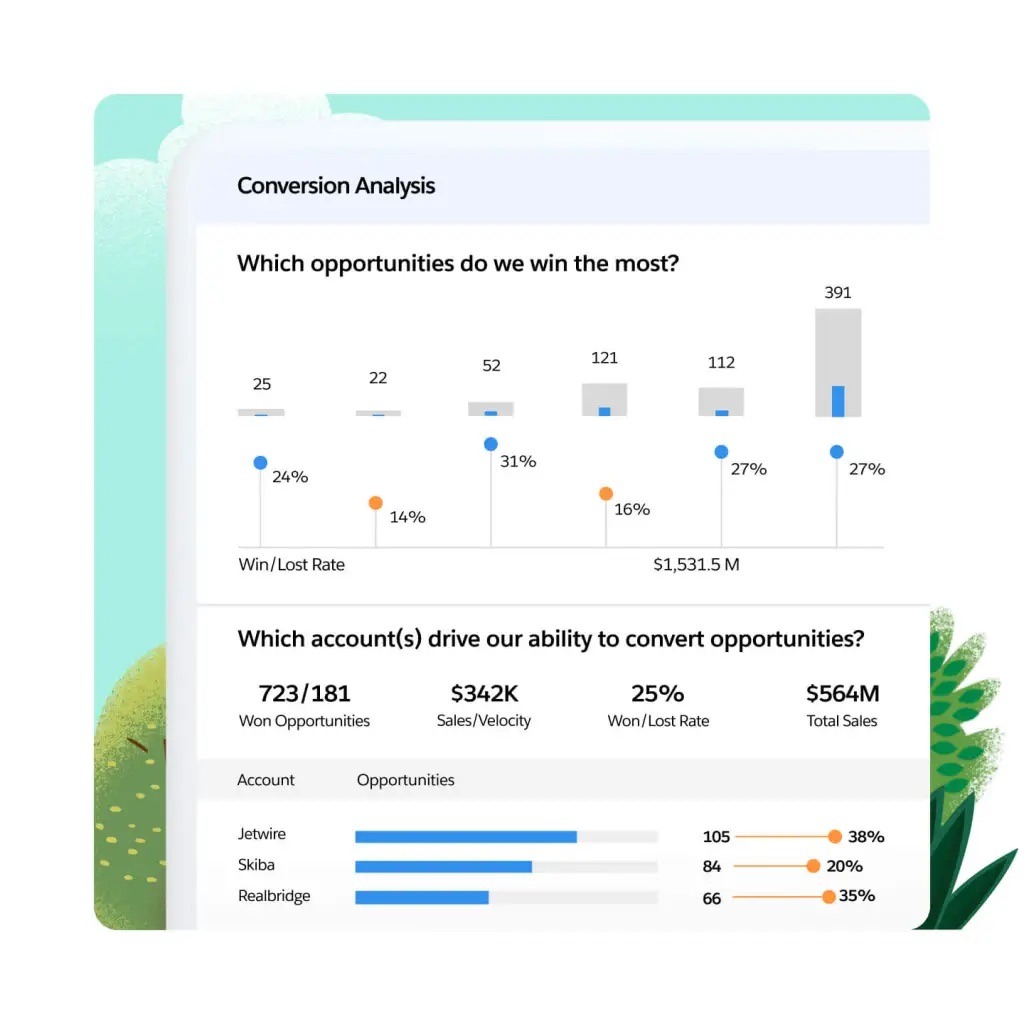
Best for: Organizations that require all intelligence to remain within the Salesforce data model and have dedicated RevOps or admin resources to configure and maintain it.
What Users Praise
Salesforce Revenue Intelligence holds a 4.4 out of 5.0 G2 rating and is the dominant AI conversation in CRM-native practitioner communities. In the Reddit conversations we reviewed for this guide, Agentforce drew 15 organic mentions versus scattered references for all other AI tools combined. Its core advantage is containment: native visibility, governance, and reporting without external data exports or third-party middleware. Organizations that have successfully deployed it at scale report meaningful reductions in manual research time, document generation, and administrative overhead.
"This has been helpful for reducing admin work and getting our docs generated and sent out quicker…" -r/salesforce Commenter
Where Users Push Back
A single demand dominates Agentforce discussions: production evidence. A representative pattern from the forums reviewed: "AF only works well in demos, but not so much in real life." Independent reviews note that the platform requires significant implementation and ongoing administrative headcount to maintain complex routing logic and dashboard functionality. Some RevOps leaders describe the user experience as "lots of clicking" compared to purpose-built external platforms. Pricing begins at $220 per user per month, a premium that users frequently benchmark against what they get versus lighter competitors.
Revenue Intelligence Layer: CRM-Native AI
Agentforce's intelligence is only as good as the Salesforce data it reads. This creates the same data-quality dependency that limits Clari, compounded by heavier configuration requirements.
“Agentforce tends to work best when it’s used as glue inside existing workflows, not as a standalone replacement for people. Enrichment, classification, summarization, and routing are where teams actually see value." -r/salesforce Commenter
4. Revenue Grid
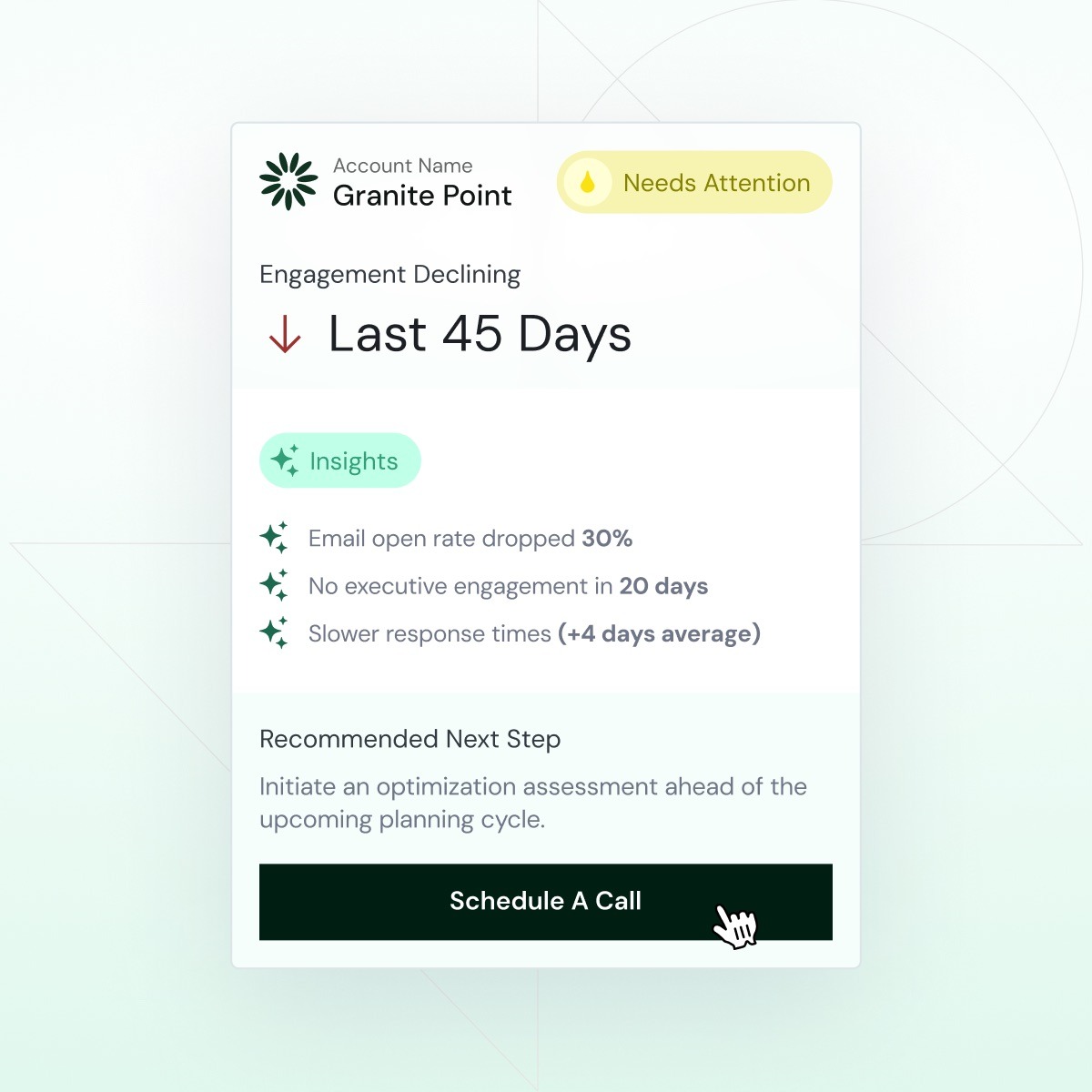
Best for: Teams embedded in Salesforce and Outlook that need automated activity capture and guided selling without switching to a separate platform.
What Users Praise
Revenue Grid holds a 4.6 out of 5.0 G2 rating and earns consistent praise for a specific, narrow capability: reliable activity capture that sits natively within Salesforce and Outlook. This reduces double-entry and keeps CRM data current without rep discipline. Users have compared it directly to Salesforce's native Einstein Activity Capture, touting Revenue Grid as the stronger option—particularly for Outlook-centric environments. Pricing transparency, with tiers starting at $30 per user per month, is frequently mentioned as a differentiator in a category where pricing is rarely disclosed upfront.
"I have personally had clients see more success with Revenue Grid's activity capture over Salesforce's…" -r/salesforce Commenter
Where Users Push Back
The platform's most-cited limitation is sync completeness. One complaint mentioned non-bidirectional sync via Visualforce. This limits workflow automation for teams that depend on field-level reciprocity. Advanced capabilities like pipeline visibility, deal guidance, and forecast modeling are gated behind the $149/user/month Ultimate tier. This means buyers need to calculate their real cost at the feature level they require, not just the entry-level price.
Revenue Intelligence Layer: Activity Capture & Guided Selling
Revenue Grid's intelligence is operationally focused; it ensures the CRM reflects actual activity and nudges reps toward prescribed next steps. It does not generate deal-level predictive scoring independent of CRM fields.
5. Substrata
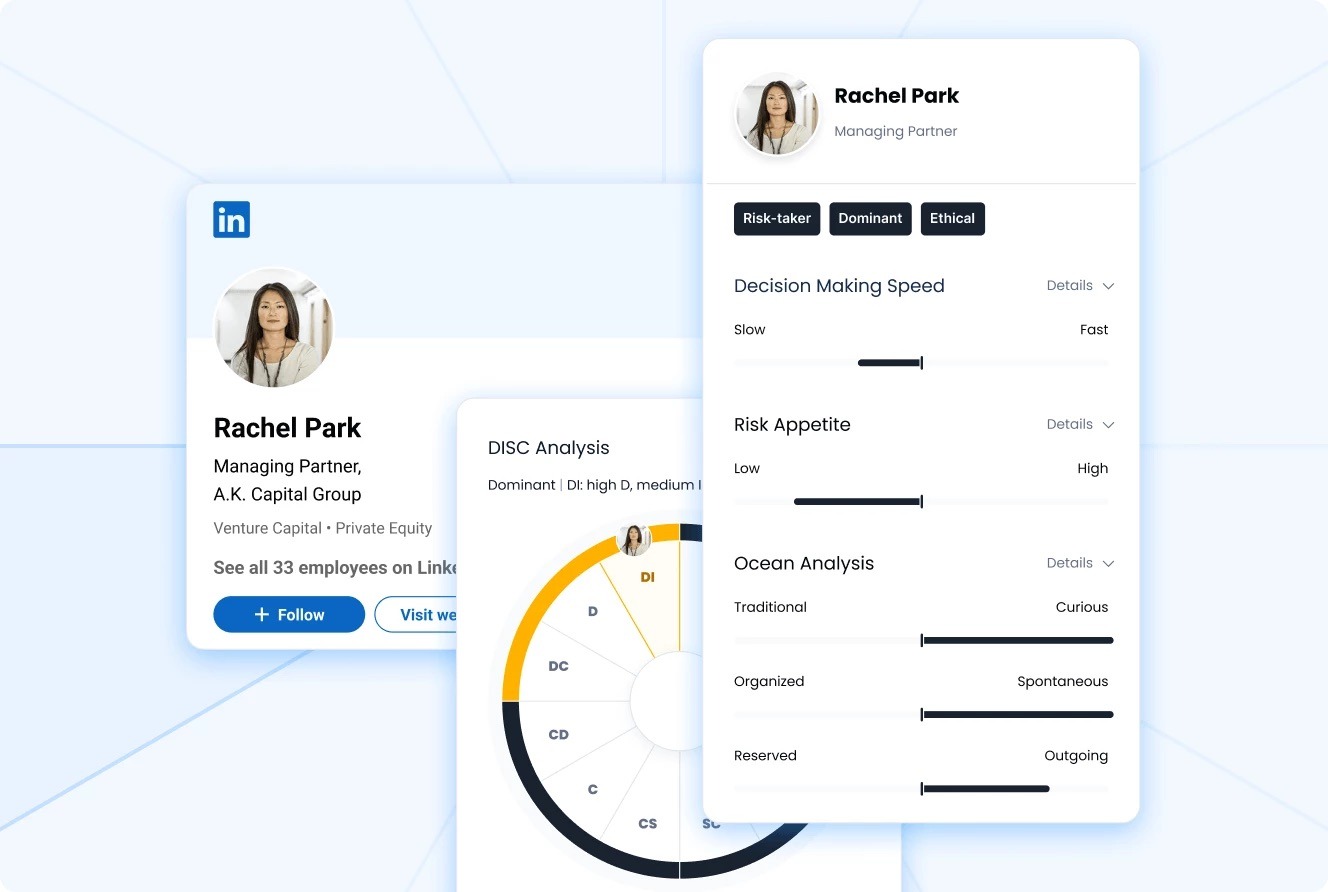
Best for: Specialized teams that want to surface nonverbal buyer signals and subtext from recorded conversations, typically as a component of a broader toolchain.
What Users Praise
Substrata holds a 4.9 out of 5.0 G2 rating, the highest in our research. It has distinct positioning: Substrata processes nonverbal cues, tone, and behavioral subtext from buyer interactions to surface intent signals that conversation-content analysis alone misses. In revenue communities, users describe it as a "quiet weapon" for sales teams that want to understand buyer disposition. Pricing is not publicly disclosed, but discussions frame it as accessible relative to Gong for teams that need intent signals without full conversation intelligence infrastructure.
"Love how Substrata is turning 'gut feeling' into actual data for sales pros." -LinkedIn Commenter
Where Users Push Back
Most of the conversation we found about Substrata was in LinkedIn influencer posts, so we’re taking everything with a grain of salt. Substrata lacks the pipeline management, forecasting, and CRM-write-back capabilities that most buying teams require as baseline functionality in a primary revenue intelligence tool.
Revenue Intelligence Layer: Intent Signal & Nonverbal Analysis
Substrata is a specialist tool; it does its job very well, but that job is narrow. Its value is highest when stacked with a primary platform that handles pipeline visibility and forecasting.
6. Chief
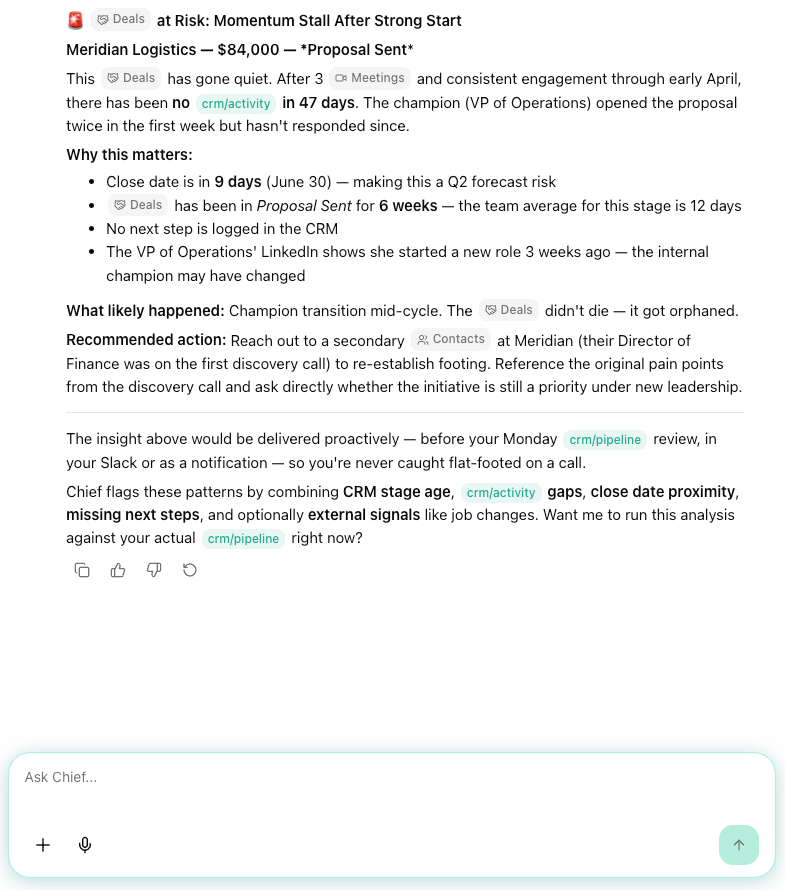
Chief is not a revenue intelligence platform in the conventional sense. What it does is different: Chief connects to a team's existing CRM, email, and calendar, and establishes a baseline for what normal deal progression looks like for that specific team. Then it surfaces four behavioral risk signals as they emerge in the pipeline: stale/inactive deals, deals stuck in a stage past normal velocity, close-date drift, and single-threaded accounts. When it detects a risk, Chief explains it, recommends the appropriate play, and offers to execute it.
Most revenue intelligence tools tell you what is happening in your pipeline. Chief is built for the step after that: what to do about it. It helps you execute the play so you can actually use your revenue intel efficiently. Chief behaves more like an employee you can teach to "bring you more of this and less of that," not a system that fires the same rules every time.
For teams already using Gong or Clari, Chief functions as the execution layer those platforms don't provide. For teams evaluating the category for the first time, Chief is the option built specifically for B2B revenue teams at $10M–$100M ARR where deal risk and forecast accuracy are major problems.
“Chief pulled all of the right context from past threads to draft the follow-up. It felt magical.” -Chief User
What Users Actually Say About Revenue Intelligence Software
We analyzed ~3,900 sentences of actual user discussions on Reddit (r/salesforce, r/Sales_Professionals, r/SalesOperations, r/techsales, r/sales), LinkedIn posts and comment threads, and the Salesforce Trailblazer community. This is what we learned about how users are really saying about their revenue intelligence tools.
4 Decision Drivers That Actually Matter
1. Price and ROI proof comes first.
Users cited cost as their primary concern about revenue intelligence tools; it appears in 57 distinct comments. Tools like Gong and Clari are described as "overkill and expensive as hell" for teams under 50 reps. Buyers report trading down to cheaper call-recording tools (Chorus, Avoma, MeetRecord) when premium platforms cannot demonstrate concrete return. One recurring user observation highlights the theme: "Case studies are written by offering very large discounts." Distrust of vendor-provided data is high; users want to see real numbers.
2. Revenue intelligence tools must integrate natively with the existing stack.
Integration quality played a large role in user feedback as well. 50 commenters said it was important that their revenue tool sits natively in Salesforce, Outlook, or Gmail and syncs bidirectionally. Unmet integration expectations formed a common dealbreaker.
3. Users want coaching infrastructure, not just call recording.
Recording and AI summaries are the most consistently praised concrete features in the category. However, users who get durable value say their managers run active coaching cadences. The tool is a delivery mechanism; the cadence is the ROI driver.
4. Users don’t trust AI enough to let it operate autonomously. They want it to remove friction for them instead.
Across the research, the highest measured ROI comes from platforms that remove administrative work. They put premiums on features like auto-logged activity, pre-call research briefs, and AI-generated follow-up drafts.
Users are skeptical of fully autonomous AI SDRs and agents; they say tools that try to replace human judgment in complex enterprise interactions "solve a confidence problem for VC investors rather than delivering consistent results in the field." This is primarily due to the risk of each action an agent can take. Drafting an email for review is a low-risk task, where sending that email autonomously without review is much riskier. Eventually we will get to the point where agentic AI systems can execute on their own, with human quality controls still in place.
What Users Want Their Revenue Intelligence Software to Do
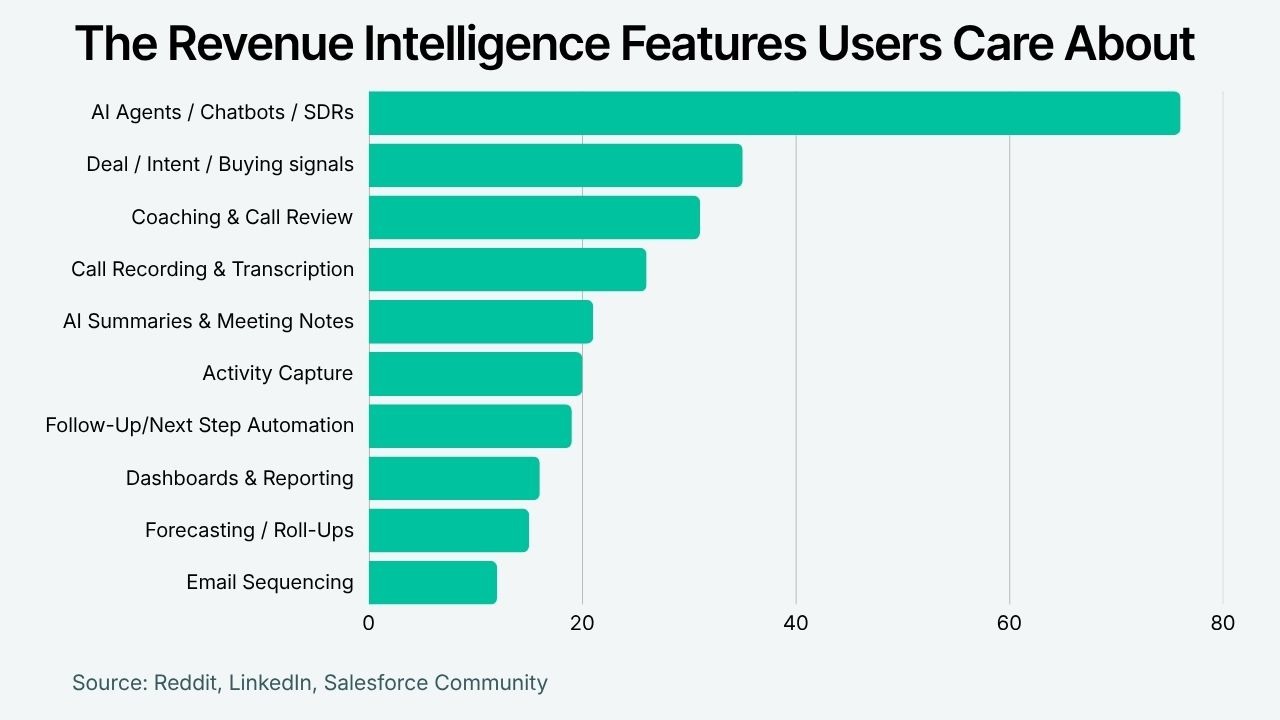
Seven key revenue intelligence capabilities emerged in our user research:
- AI Agents, Chatbots, and AI SDRs (76 mentions). This is the most discussed topic, dominated by Agentforce-related discourse. The core debate is not which agent is "best," but a fundamental skepticism about whether these agents actually deliver consistent results in production environments.
- Deal, Intent, and Buying Signals (35 mentions). Users are increasingly focused on non-verbal signals like tone, body language, and subtext. This is a primary driver for interest in specialized tools like Substrata, as buyers look for signals beyond standard CRM data.
- Coaching Tools and Call Review (31 mentions). Frequently overlapping with call recording, this is viewed as the primary ROI driver for conversation intelligence. Users emphasize that the tool itself is only as effective as the management coaching cadence it supports.
- Call Recording and Transcription (26 mentions). This capability got the most consistent praise across all price tiers. However, users note that "good enough" transcription is now a commodity available in lower-cost tools, which is actively undercutting the pricing power of premium platforms.
- AI Summaries and Meeting Notes (21 mentions). Similar to transcription, users view this as a "table stakes" feature that reduces admin friction. They value it highly for productivity, but it’s not a strong differentiator for enterprise-level tools.
- Activity Capture (20 mentions). Users primarily measure integration-focused tools like Revenue Grid with this ruler. They focus on reliability and true bidirectional sync between email/calendar and CRM, with many still struggling with fragmented data.
- Follow-up and Next-Step Automation (19 mentions). This feature category covers guided selling and "next best action" functionality. Users are prioritizing tools that don't just capture data but proactively suggest the next move to keep deals moving.
- Dashboards and Reporting (16 mentions). Users increasingly approach this feature with skepticism. They’re moving away from the "dashboard paradigm," viewing static reporting as a legacy feature that is often overbuilt and lacks true actionability.
- Forecasting and Roll-ups (15 mentions). Clari owns this featureset, focused on executive teams’ need for pipeline governance and commit tracking. It is a niche, high-value requirement, mostly for enterprise operations.
- Email Sequencing and Cadences (~12 mentions). This is primarily the territory of established sales engagement platforms (Salesloft/Outreach). While important, it is considered secondary to core revenue intelligence capabilities in this specific research.
How Users Feel about the Top Revenue Intelligence Tools
We ran a sentiment analysis on the data we collected (238 organic mentions across five tools). This is how each tool scored:
How to Choose the Right Revenue Intelligence Tool
Any major software purchase depends on picking the right tool for your team's specific situation. The table below maps common buying scenarios to the tools that practitioners most consistently recommend for each.
Common Questions About Revenue Intelligence Software
What is revenue intelligence software?
Revenue intelligence software analyzes deal activity from CRM fields, email, calendar, and recorded calls. It helps sales leaders understand where the pipeline is healthy, where deals are at risk, and what is likely to close. The category spans tools focused on conversation intelligence (what buyers and sellers say), forecast governance (pipeline accuracy at the executive level), activity capture (ensuring CRM data reflects actual rep behavior), and behavioral signal detection (identifying deal risk from patterns in activity, not rep-entered fields).
How is revenue intelligence different from a CRM?
A CRM records what reps enter. Revenue intelligence derives meaning from what is actually happening in deals: stakeholder engagement patterns, stage velocity against team norms, response latency, multi-threading depth, etc. The practical difference is that a CRM shows you that a deal moved to "verbal commit," and revenue intelligence shows you whether anyone at the buyer's company has engaged since the last meeting.
What’s the difference between revenue intelligence and revenue orchestration?
Revenue intelligence describes the capture, analysis, and scoring of deal activity. Revenue orchestration extends that to include sales engagement execution, workflow automation, and buyer interaction management. The distinction matters for procurement: platforms built primarily for intelligence may require separate engagement tools; platforms built for orchestration attempt to own both.
Does revenue intelligence software replace a CRM?
No. Every tool in this category connects to an existing CRM (Salesforce or HubSpot in most cases) and reads from or writes to it. Revenue intelligence is a layer above the CRM, not a replacement for it.
What does revenue intelligence software cost?
Pricing varies by architecture. Gong combines a platform fee (historically ~$5,000) with per-user licensing (~$1,600/year), producing effective costs of $300–$500/user/month for smaller teams. Clari is customized for enterprise deployments, with estimates exceeding $200/user/month. Revenue Grid is the most transparent, with published tiers from $30/user/month (activity capture) to $149/user/month (full pipeline and forecasting). Salesforce Agentforce starts at $220/user/month. Chief has a free tier for teams of 1-5 with limits on execution, with a team tier at $150/user/month. Substrata doesn’t publish standard pricing.
Why do revenue intelligence implementations fail?
Three causes appear most consistently in community discussions:
- CRM data quality: tools that read from field data inherit the optimism and inconsistency of rep-entered records
- Coaching cadence dependency: call intelligence platforms derive their value from whether managers actually review recordings and run structured coaching
- Adoption friction: when a platform requires reps to change their behavior significantly, compliance collapses and the intelligence layer loses its signal source.
When is revenue intelligence worth the investment?
Revenue intelligence makes sense for teams with stalled deals and unexpected forecast misses. Teams that still get pipeline surprises the Friday before quarter close, despite running a CRM and forecasting tool, typically have a deal signal problem, not a data entry problem. Revenue intelligence tools are designed to close that gap.
Note on Methodology: User sentiment data cited in this article reflects a mixed-methods NLP analysis of approximately 3,900 comments from Reddit (r/salesforce, r/Sales_Professionals, r/SalesOperations, r/techsales, r/sales, r/RevenueManagement), LinkedIn, and Salesforce Trailblazer community, conducted in June 2026. VADER sentiment scoring applied at the mention level; n values per tool as reported. G2 ratings current as of June 2026.